
A World Blueprint is what studios call a series bible: a single document that holds what your series must keep the same. Copy the template below, fill in what you know, and leave the rest blank until the pilot needs it.
For the method behind it, start with how to build a world for an animated series, then come back here and write it down.
The example in this post. We made this one up, so you can watch each section fill in on the same story: The Keeper's Light, about the last lighthouse keeper on a dying coast and the thing he keeps locked in the lamp room.
What is a World Blueprint?
A World Blueprint is the working document that holds what a series must keep the same: its idea, its rules, its characters and its look. Anyone writing, drawing or generating a shot checks their work against it. It is not a pitch deck and it is not lore.
It exists so episode 10 still looks and feels like episode 1, whoever or whatever made it.
The form is an old and practical one. Slate's look at the 1967 Star Trek writers' guide shows pages written to help writers get an episode's tone and content right.
StarTrek.com's tour of later versions shows the form carried on across its series. Those were written for writers' rooms. This one is written for a creator and a small team.

What goes in the template?
The template has 9 sections, and each has a limit so it stays usable. Start with Section 1. Sections 1 to 4 decide what your show is and how it looks, and they are the ones to finish in your first sitting.
Sections 5 to 9 can stay rough until the pilot needs them. Copy the whole thing below and fill it in anywhere you write.
| Section | What you decide | The limit |
|---|---|---|
| 1. The one-page core | Logline, 2 comps, why this story, why you | 1 page |
| 2. World rules | What every collaborator must apply | 1 page, 10 rules |
| 3. Character sheets | Looks, voice, what never changes | 1 sheet per main character |
| 4. Style lock | Palette, render style, do and don't | 5 colours, 5 dos, 5 don'ts |
| 5. Format | Length, aspect, structure | Pick 1 of each |
| 6. Episode engine | Formula, one-liners, pilot beats | 1 sentence, 5 to 10 lines |
| 7. Production plan | Who, with what, by when | Small enough to happen |
| 8. Release plan | Platform, cadence, community | 2 platforms |
| 9. Ownership notes | What you own and who else touched it | 6 questions to ask |
Download the World Blueprint templateEditable version
Steal this
The Kizen World Blueprint template
KIZEN WORLD BLUEPRINT
Fill in what you know, leave the rest blank, and come back to it.

1. THE ONE-PAGE CORE
Title:
Logline: When [character] [inciting event], they must [goal] before [obstacle or stakes].
2 comps (story and tone only, never visual style): It's [Comp A]'s ___ with [Comp B]'s ___.
Why this story (3 to 5 sentences: what it's really about, underneath the plot):
Why you (3 to 5 sentences: what you know, have lived or care about):

2. WORLD RULES (hard cap: 1 page, 10 rules)
Rule | What it means on screen
1.
2.
3.
How does power work here? Who has it and who doesn't?
What can never happen in this world?
What does an ordinary day look like for an ordinary person?
What do people here believe that isn't true?
Key places (3 to 5, one line each):

3. CHARACTER SHEET (1 per main character)
Name:
Role in the story:
What they want:
What they're afraid of:
Build and height:
Skin, fur or surface:
Face and eyes:
Hair:
Signature clothing or markings:
Colour notes (3 max):
Reference slots: front, side, back, face close-up, happy, angry
How they sound:
A line only they would say:
What they never say:
What never changes (3 to 5 things):
Locked description (60 to 100 words, visual only, no personality, no art-style words):

4. STYLE LOCK
Palette (5 colours max):
Line and render style, in plain words:
Lighting mood:
Reference frames you made or own (3 to 6):
Do (5 max):
Don't (5 max):
House rule: no named-studio or named-artist styles. Describe the look in your own words.

5. FORMAT
Episode length: 60 seconds / 3 minutes / 11 minutes / other
Aspect: vertical 9:16 / horizontal 16:9 / both (which is primary?)
Structure: self-contained / serialized / hybrid
Episodes in season 1:
Where episode 1 has to land by the 3-second mark:

6. EPISODE ENGINE
Formula: Every episode, [character] [does or faces] ___, which leads to ___, and ends with ___.
Episode one-liners (5 to 10):
Pilot beats: hook (first 3 to 5 seconds), setup, inciting moment, rising trouble, turn, climax, button (last 5 seconds)

7. PRODUCTION PLAN
Role | Who | Tools: writer, visual development, storyboard, voice, music and sound, edit
Target dates: Sections 1 to 4 done, pilot script locked, characters and style locked, rough cut, pilot final, episode 2 started
Your own costs: tools, voice, music and sound, other, pilot total

8. RELEASE PLAN
Main platform:
Second platform:
Cadence:
Pinned "start here" post:
Community hooks (pick 2 or 3):
What you'll share before the pilot is finished:
How someone can follow along:

9. OWNERSHIP NOTES (not legal advice)
What I own: story and scripts, characters, world, finished episodes, music and voice recordings
Who else has touched this, what they contributed, what they get, and is it written down?
Before you sign anything, ask:
1. Do I keep ownership of my characters and world, or am I transferring it?
2. Is the licence exclusive or non-exclusive? Can I still publish this elsewhere?
3. How long does it last, and can it end?
4. Who controls adaptations (comics, games, merch, a longer series)?
5. What happens to my work if I stop working with them?
6. Can they use my work for anything beyond what we agreed, like marketing or training?
What do you write on the one-page core?
Write the page you would hand a stranger: a title, a logline, 2 comps, why this story and why you. The logline names a character, what they want and what is in the way. Comps describe story and tone, never visual style.
If it does not fit on 1 page, it is not clear yet, and more pages will not fix that.
If you only finish 1 page, finish this one.
How do you write world rules instead of lore?
A rule is something a collaborator or a tool must apply on every page without asking you. Lore is everything else, and it can wait. Cap the rules at 10 and at 1 page, and give each one a second column for what it means on screen.
If you run past 1 page, you are building a world and not yet building a show.
Novelist Brandon Sanderson's second law says limits are more interesting than powers, and it holds for any rule: write down what your world will not let people do. To test when you have done enough, use our guide to how much worldbuilding you need.
If your world has powers, our power system guide shows how to give them real limits.
How do you keep characters the same in every shot?
Give each main character 1 sheet, and be boringly specific. "Tall" is useless. "Taller than everyone in the room by a head" is useful. Finish the sheet with a locked description: 1 paragraph of 60 to 100 words, visual only, with no personality and no art-style words.
Paste that exact paragraph every time you brief an artist, a voice actor or a tool.
Rewriting it from memory is how drift starts. If you make shots with AI tools, add reference images as well. Vendor guides differ on how many: Luma suggests 10 to 15 per character and LongStories suggests 6 to 10.
Both sell these tools, so treat the numbers as starting points. We cover the rest in how to keep AI characters consistent.
Steal this
Locked description, for your character sheet
[Name] is [build and height, compared to something in the frame]. [Skin, fur or surface]. [Face and eyes, including anything that must stay on the same side]. [Hair]. [Signature clothing or markings]. [Colours, 3 max]. [What they are never shown with or without].
How do you lock the style?
Decide how your show looks once, write it down, and stop deciding it again every episode. Pick a palette of up to 5 colours, describe the line and render style in plain words, and name the lighting mood you want.
Add 3 to 6 reference frames you made or own, and up to 5 dos and 5 don'ts. Then describe every shot against that page.
Keep 1 house rule: no named-studio or named-artist styles. Describing the look in your own words is more respectful, and it makes the look yours.
A sketch helps here, because it fixes the layout before any colour goes on, so the finished image stays the same place. For sets and palettes across a season, see how to keep locations and style consistent.


Want to build yours in Kizen?Get early access
Which format should you pick?
Pick the length, aspect and structure now, because they shape the writing more than people expect. Choose vertical or horizontal, and say which comes first if you plan to make both. Whichever you pick, decide where episode 1 has to land by the 3-second mark.
Length
- 60 seconds: holds 1 moment and a hook.
- 3 minutes: holds a scene with a turn.
- 11 minutes: holds a full A-story.
Structure
- Self-contained: episodes work on their own, which suits feeds that will not show them in order.
- Serialized: episodes build on each other, which suits an audience that came to follow the story.
- Hybrid: self-contained episodes with a thread running underneath.

How do you plan the episodes and the pilot?
Write an episode engine: the repeatable shape every episode follows, in 1 sentence. If you cannot describe it, episode 4 will be hard to write. Then list 5 to 10 episode one-liners and write a beat sheet for the pilot only.
You do not need a whole season mapped out to start. You need 1 episode that works.
Storyboard the pilot's opening before you make a shot. A rough pencil pass tells you what each shot has to do, and it costs almost nothing to change.
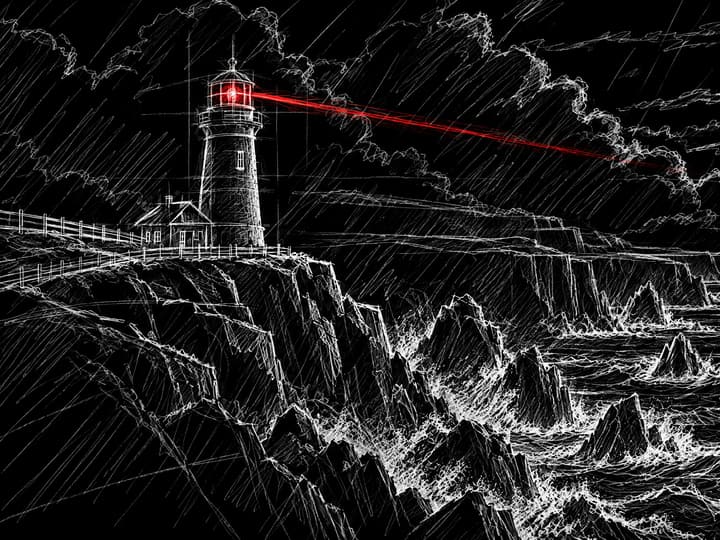
Hook. Wide on the coast. The only light for miles.
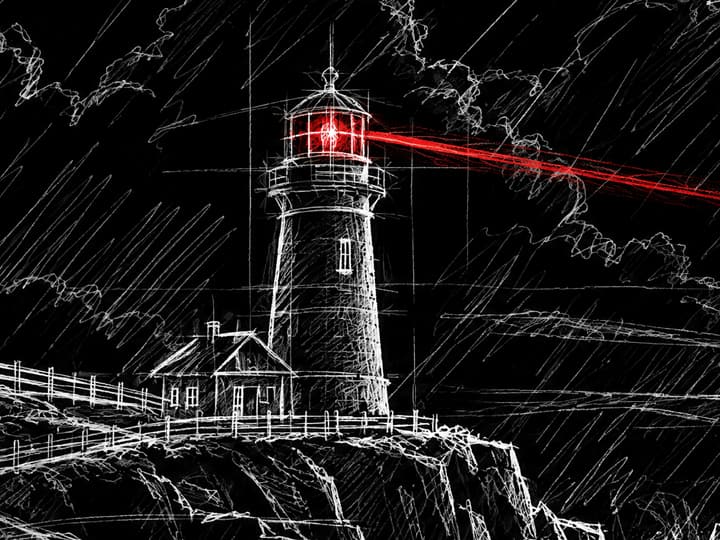
Setup. Closer. 1 house, 1 tower, 1 man left.
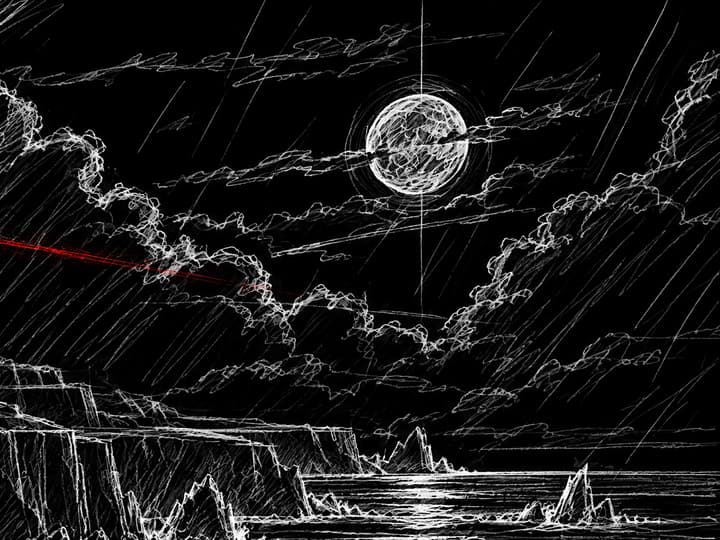
Inciting moment. The beam stops turning. Nobody stopped it.
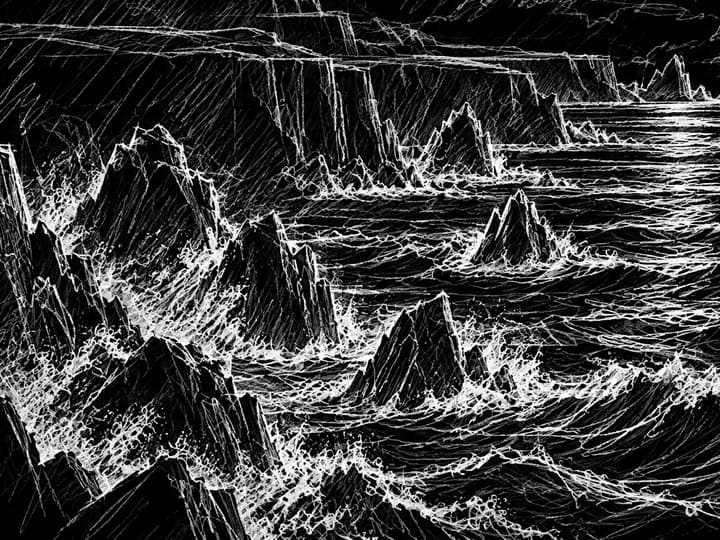
Button. No ship tonight. He keeps the lamp burning anyway.


What do the production, release and ownership sections cover?
These 3 sections make the show real.
- Production plan: says who does what, with which tools, by when. Keep it small enough that it actually happens.
- Release plan: treats the audience as part of production: where you post, how often, and what a new viewer sees first.
- Ownership notes: record what you own before anyone asks.
Before you sign anything, ask the 6 questions in Section 9. The most important 2 are whether you keep your characters and world, and whether anyone can use your work for anything beyond what you agreed.
This is not legal advice, so if something is at stake, talk to a lawyer. When you want the longer version of the document, read our full guide.
Where does Kizen fit?
You control the story. You write it and make every creative call. In Kizen, you build the world once, with Ki beside you, and every episode remembers it, so the cast stays themselves in every shot. The template works with any tools you like.
It is also what Kizen needs from you, so nothing you write here goes to waste.
To see each step on a real series, read how a Kizen Original gets made. If you have a series you want to make, see Kizen Originals.
You control the story. Kizen handles the rest.Get early access
Frequently asked questions
What is the difference between a World Blueprint and a pitch deck?
A pitch deck sells a show to someone who can pay for it. A World Blueprint is a working document for the people making it. You write it in plain sentences, you keep changing it, and nobody grades the formatting. Build the pitch from the blueprint later, if you ever need one.
How long should a World Blueprint be for a short series?
This template sets a limit for each section instead of a total page count. The core is 1 page, the rules are 1 page, and each main character gets 1 sheet. If a section runs past its limit, you are probably writing lore the pilot does not use yet.
Do you need the whole season planned before you start?
No. You need 1 episode that works, plus enough of a formula to write the next one. The template asks for 5 to 10 episode one-liners and a beat sheet for the pilot. Those can change once you have made the pilot and seen what your story wants to be.
Can you use this template with AI tools?
Yes. Sections 3 and 4 are written for it. Anything you have not decided gets decided for you, and differently from shot to shot. Paste the same locked description into every prompt, keep your reference images together, and describe your style in plain words rather than naming someone else's.

Written & directed by
Toronto-based serial founder and distribution expert. Leads growth at Kizen, helping creators turn their stories into animated series.
Sources
- Pages from the Official Star Trek Writers' Guide, 1967, Rebecca Onion, Slate, 2013
- A Look Inside Star Trek Series Bibles, Rob Wieland, StarTrek.com, 2021
- Sanderson's Second Law, Brandon Sanderson, 2011
- 8 AI Character Prompts: How to Keep the Same Character Across Every Shot, Luma, 2026. Luma sells AI video tools
- Maintaining Style Across AI-Generated Video Series, LongStories, 2026. LongStories sells AI video tools